Beyond the Prescription Bag: Why a Complete Inventory of What You Take Belongs at Every Fill

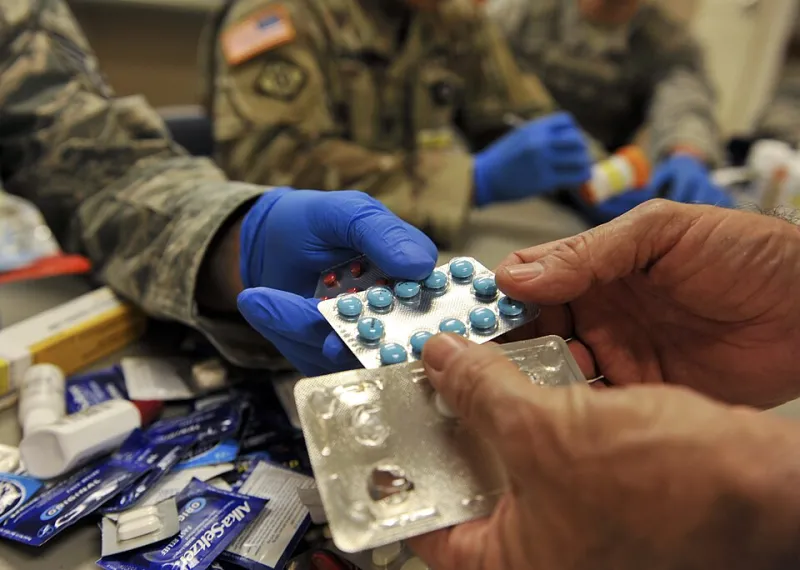
Photo: U.S. Navy NMRTC by Emily McCamy, Public domain, via Wikimedia Commons
At the pharmacy counter, the prescription bag tells only part of the story. The bottles inside may represent the medicines a patient considers official, serious, or prescribed. The vitamin tablet taken each morning, the herbal tea brewed at night, the antacid borrowed from a spouse, and the over-the-counter sleep aid used on a difficult week often stay outside the conversation.
That gap is not a failure of patients. It reflects how people categorize their own routines. Prescriptions feel like treatment; supplements feel like wellness; antacids feel like convenience. From a pharmacist’s perspective, however, all of these products are exposures that can affect the body, interact with one another, or change how a prescribed medicine works.
Why the blank spaces matter
Pharmacists screen for interactions using the information they are given. A complete list allows for a more meaningful review. An incomplete list can make a safety check look cleaner than it really is. This is especially important for medicines with a narrow therapeutic range, such as warfarin and other blood thinners, levothyroxine for thyroid replacement, and certain antidepressants.
In the United States, dietary supplements are regulated as a category of food rather than as drugs. They are not approved by the US Food and Drug Administration for safety and effectiveness before they are marketed. Labels can vary in how fully they list ingredients, and products sold as natural are not automatically free of pharmacological effects. Herbal preparations can contain active plant compounds. Multivitamins can contain minerals that interfere with absorption. Even products marketed for digestion or sleep can add to the effects of prescription medicines.
The goal is not to make patients fearful of every supplement. The goal is to make the pharmacist’s review accurate. Many interactions are manageable when they are known. Some require spacing doses; others require monitoring; still others call for a different product choice. None of those steps can be taken if the product remains unmentioned.
What counts as something you take
A useful medication inventory is broader than a list of prescribed pills. It should include anything taken by mouth, applied to the skin, inhaled, injected, or used as needed. For most patients, the practical categories are:
- Prescription medicines, including eye drops, inhalers, injectables, patches, and samples from a clinician’s office.
- Over-the-counter pain relievers, cold and flu products, allergy medicines, sleep aids, laxatives, and antacids or acid reducers.
- Vitamins, minerals, multivitamins, and single-nutrient supplements.
- Herbal products, botanical extracts, tinctures, powders, and teas marketed for health purposes.
- Topical products that contain active ingredients, especially those used over large areas or on broken skin.
- Products borrowed from family members or friends, even if used only once or twice.
- Medicines recently stopped, because a recent change can still matter during a review.
Patients sometimes omit products they consider minor. A calcium chew taken with levothyroxine is not minor if it reduces absorption. A fish oil capsule is not minor if a patient is also taking an anticoagulant. A borrowed antihistamine is not minor if it adds sedation to a prescription sleep medicine. The pharmacist does not need a judgment about which product is important; the pharmacist needs the facts.
Common interaction examples that deserve a conversation
Several familiar combinations illustrate why the full picture matters. These examples are not a complete list, and they are not a reason to stop a product without speaking to a clinician or pharmacist. They are a reason to disclose.
Blood thinners such as warfarin can be affected by vitamin K intake, including vitamin K in multivitamins and in leafy green supplements. Fish oil, garlic, ginkgo, and other products with antiplatelet effects may add to bleeding risk. St. John’s wort is well known for interacting with warfarin and with many prescription medicines, including some antidepressants and transplant medicines.
Levothyroxine absorption can be reduced by calcium, iron, and antacids. A patient may take these products at different times of day and still create a problem if the timing is close enough. The pharmacist can review the schedule and suggest a practical separation if appropriate.
Antacids and acid reducers can affect the absorption of certain antibiotics and other medicines. Some antidepressants, including selective serotonin reuptake inhibitors, require caution when combined with St. John’s wort or with other products that affect serotonin. Over-the-counter sleep aids and cold medicines can add sedation or raise blood pressure when combined with prescription products.
Not every interaction is serious, and not every combination requires a change. The purpose of disclosure is to separate the manageable from the important. A pharmacist can help patients understand which products need spacing, which need monitoring, and which may be better replaced.
The five-minute everything-I-take list
A complete list does not require a software program or a special notebook. It requires one surface, all the containers, and a few minutes of honesty.
- Gather every product in one place. Include the bottle at work, the supplement in the kitchen, the tea tin in the cupboard, and the antacid in the car. If a product is used only occasionally, include it and note how often.
- For each product, write the name exactly as it appears on the label. Add the strength, the dose, and how often it is taken. Note the reason, if known, and who recommended it. For as-needed products, write the usual amount and the usual frequency.
- Add recent changes. List products started or stopped in the past two months. Note any dose changes, even temporary ones.
- Record allergies and bad reactions. Include rashes, stomach upset, dizziness, or any symptom that appeared after a product was started.
- Take a photograph of the list and bring it to the next fill. Ask the pharmacist to review it alongside the prescription record.
This list is not a permanent document. It should be updated when a prescription changes, when a supplement is added, or when a product is borrowed. A photograph on a phone is often more useful than a perfect handwritten list left at home.
How to share it without turning a fill into a long visit
Patients can call the pharmacy ahead and ask for a medication review, or use a pharmacy portal if one is available. Bringing the list to a scheduled pickup is usually easier than reconstructing it at the counter. A pharmacist can then compare the list with the prescription profile, ask targeted questions, and document the supplement and over-the-counter products in the record.
At Pharmacy Optum, prescription services are built around the idea that fulfillment and safety belong together. That means more than filling bottles accurately. It means giving patients a straightforward way to share the full picture, including the products that never came with a prescription label.
The most important step is the first one: mention the supplement, the tea, the antacid, or the borrowed remedy. A pharmacist cannot evaluate what a patient does not disclose. A five-minute list before the next fill can turn an incomplete story into a safer plan.