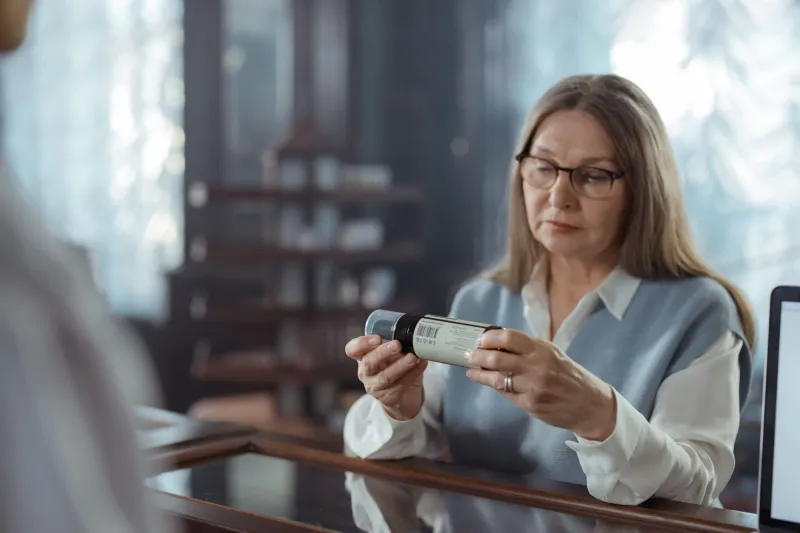
Permission at the Pickup Window: Who May Collect a Prescription — and What the Pharmacy May Say
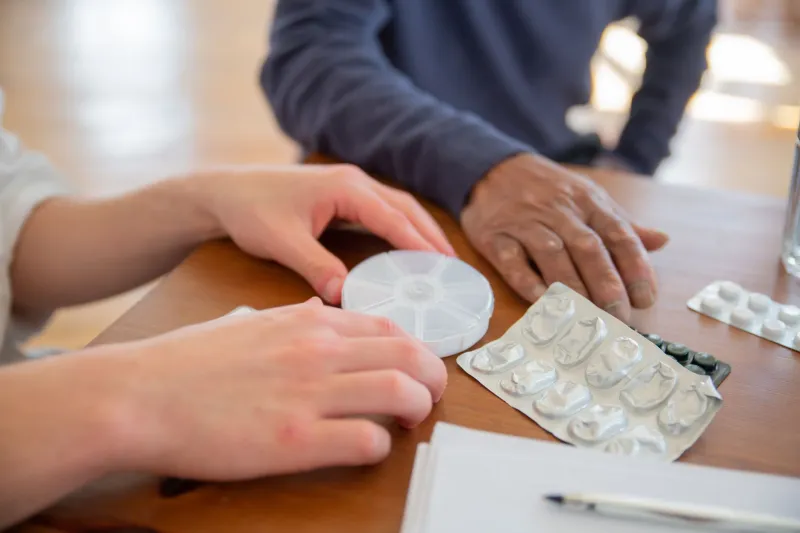
A prescription pickup can feel like a routine errand, but it is also a privacy event. The person behind the counter must confirm that the medicine is being released to the right person, and must avoid revealing health information to someone who has no authority to receive it. Patients often assume that a spouse, adult child, or trusted friend can always collect a prescription. Pharmacy staff, meanwhile, may be required to follow identification rules, release forms, and state-specific limits that patients never see.
The result is a familiar friction at the counter: a family member is turned away, or a patient worries that too much was said in a public line. The general framework below applies to US pharmacies, but it is not legal advice. State law, controlled-substance rules, and individual pharmacy policy can change the details.
The Short Answer: Permission Comes First
There is no single national rule that says any family member may pick up any prescription. In general, a pharmacy may release a prescription to the patient or to someone the patient has authorized, provided the pharmacy can verify the person and follow its own procedures. Authorization may be recorded in the pharmacy file, documented on the pharmacy's release form, or given by the patient at the time of pickup, depending on the pharmacy and the medicine.
That means the most useful question is not simply "Can someone else pick this up?" but "Has the patient given this pharmacy a way to verify and document permission?" A patient who plans ahead is far less likely to encounter a refusal.
What HIPAA Does — and Does Not — Require
The HIPAA Privacy Rule, which dates to 1996, governs how covered health care providers, including most pharmacies, may use and disclose protected health information. It permits disclosures to the patient and to a personal representative, and it allows certain limited involvement of family members and friends who are helping with the patient's care. In many routine situations, a pharmacist may share information with a family member or caregiver if the patient agrees, has been given an opportunity to object, or if the circumstances reasonably suggest the patient would not object.
HIPAA does not, however, require a pharmacy to release a prescription to anyone who arrives at the counter. It also does not override state law or pharmacy policy that adds stricter requirements. A pharmacy may ask for identification, may require a signed authorization, or may decline a pickup when staff cannot verify permission. The Privacy Rule sets a floor and a framework; it is not a universal pickup pass.
Who Counts as an Authorized Pickup?
Several categories are commonly recognized, though the details vary by state and pharmacy:
- The patient. The patient may generally pick up their own prescription, subject to identification requirements.
- A parent or legal guardian. For a minor, a parent or guardian generally may collect prescriptions, but state law and pharmacy policy may impose conditions, especially for controlled substances.
- A personal representative. A person with legal authority to act for the patient, such as a health care proxy or guardian, may have broader rights, but the pharmacy may ask for documentation.
- A caregiver or family member named by the patient. A spouse or adult child is not automatically authorized simply by relationship. The patient usually needs to add the person to the pharmacy record or complete the pharmacy's authorization process.
- Someone with a one-time permission. Some pharmacies allow the patient to call ahead and authorize a specific person for a specific pickup. Staff may verify the patient's identity and note the permission in the file.
Controlled substances often carry additional requirements. Some pharmacies require the patient to present identification in person, limit who may pick up certain medicines, or require a government-issued ID from the person collecting the prescription. Patients should ask about these rules before sending someone else.
Scenario: A Spouse at the Drive-Through
A spouse arriving at the drive-through may assume that sharing a last name and address is enough. It may not be. The pharmacy may ask for the patient's date of birth, the patient's address, the spouse's identification, or confirmation that the spouse is listed as an authorized pickup person. Staff should avoid announcing the medicine name through the speaker or discussing details in a way that others can hear.
If the spouse is not authorized, the pharmacy may contact the patient for permission or ask the spouse to have the patient call. The best preparation is to add the spouse to the pharmacy record before the need arises, and to ask whether the pharmacy requires a signed form or a verbal password.
Scenario: An Adult Child Helping a Parent
An adult child managing a parent's medications often needs pickup authority, but authority to help with errands is not the same as authority to make health care decisions. A parent can usually authorize the child to collect prescriptions by contacting the pharmacy and adding the child's name to the record. The pharmacy may provide a release form that describes the scope of permission — for example, pickup only, or pickup and discussion of copays and availability.
If the parent has a health care proxy or durable power of attorney that covers health care, the child may have broader authority as a personal representative. The pharmacy may ask to see the document. Even then, the pharmacy may limit what it discusses at the counter to protect privacy.
Scenario: A Minor Picking Up Their Own Medication
Whether a minor may collect their own prescription depends on state law, the type of medicine, and pharmacy policy. Some pharmacies allow older adolescents to pick up certain prescriptions with identification and a parent's prior consent. Others require a parent or guardian for all pickups, or for controlled substances. Emancipated minors may have different rights under state law.
Parents can reduce uncertainty by asking the pharmacy about its minor pickup policy and by documenting consent if the pharmacy allows it. A teenager should not be sent to the counter assuming that age alone settles the question.
Setting Up Authorization Before a Pickup Goes Wrong
A short setup conversation can prevent a difficult one later. Consider these steps:
- Ask the pharmacy what it requires. Policies differ on verbal permission, written forms, identification, and controlled substances.
- Add authorized names to the pharmacy record. Ask staff to note the person's full name and relationship to the patient.
- Complete the pharmacy's release or authorization form. Keep a copy and note any expiration date or limits.
- Clarify the scope. Decide whether the authorized person may only pick up medicines or may also discuss copays, availability, and refill status.
- Set a verbal password if offered. A password can help staff verify permission by phone without disclosing details to an unknown caller.
- Update contact preferences. Ask how the pharmacy leaves voicemails and whether detailed messages are permitted.
- Review the arrangement after life changes. A move, divorce, new caregiver, or change in insurance can make an old authorization outdated.
What Staff May Say — and What They Should Not
When a person is authorized, pharmacy staff may generally confirm that a prescription is ready, discuss the copay, and handle pickup logistics. They should still avoid unnecessary disclosure. Announcements in a crowded line, detailed voicemails, and conversations within earshot of other customers can reveal health information even when the person receiving it is authorized.
When a person is not authorized, staff should not confirm whether a particular prescription exists, what it treats, or whether the patient has been in the pharmacy. They may ask the person to have the patient contact the pharmacy, or they may call the patient if the patient has agreed to that form of contact. A polite refusal is not necessarily poor service; it may be the privacy rule working as intended.
If a Pickup Goes Wrong
If a family member is turned away, ask to speak with the pharmacist or manager and ask what documentation would resolve the problem. Avoid pressing staff to disclose information in a public area. The patient can call the pharmacy directly to authorize the pickup or to ask what is missing.
If a patient believes a pharmacy disclosed information improperly, the pharmacy's privacy officer is the first contact. A formal complaint may also be filed with the US Department of Health and Human Services Office for Civil Rights, and state pharmacy boards may handle related consumer concerns. Keeping a record of dates, names, and what was said can help.
The Bottom Line
Permission to pick up a prescription is not automatic, and it is not determined by family relationship alone. It is a documented arrangement between the patient and the pharmacy, shaped by HIPAA, state law, and store policy. A five-minute conversation before the next refill is due can spare a patient, a caregiver, and a pharmacy team an awkward and unnecessary dispute at the window.