The Strip-Pack Question: What a Pharmacy Can — and Cannot — Do With a Twelve-Medication Regimen
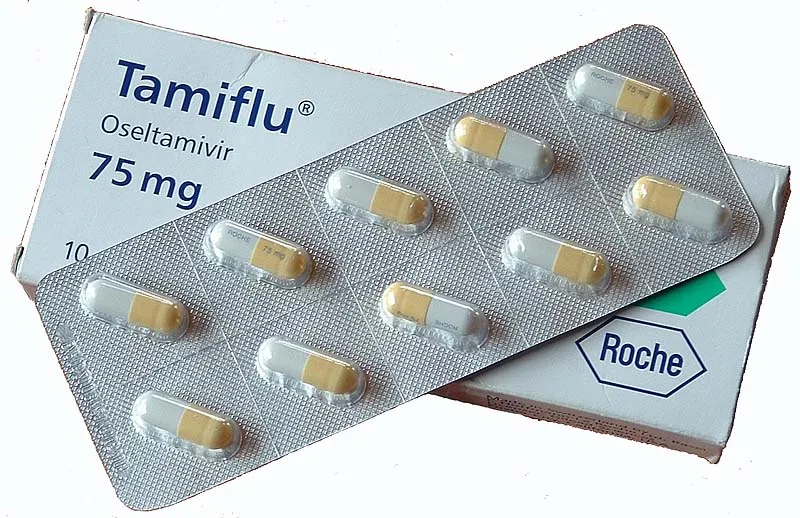
Photo: en:User:Moriori, Public domain, via Wikimedia Commons
For a patient managing a dozen prescriptions, the appeal is obvious. Instead of opening twelve bottles and counting out forty pills each week, a sealed pouch or blister cavity arrives already holding everything due at 8 a.m. on Tuesday. The arrangement works well for many people — and it comes with constraints that are easier to navigate when you know them in advance.
Two formats, one purpose
Adherence packaging at a US pharmacy generally takes one of two forms.
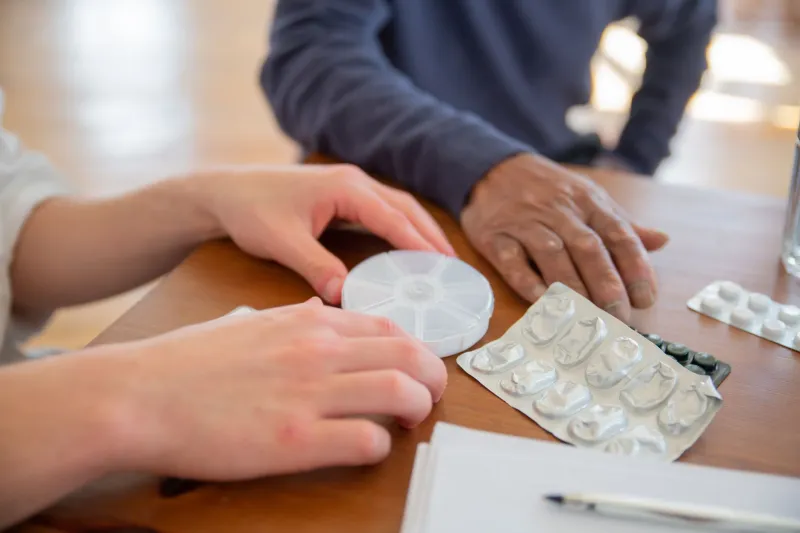
Multi-dose blister cards are rigid or semi-rigid cards with individual cavities arranged by day and time of day, often covering a 28- or 30-day cycle. Pharmacy staff fill each cavity, seal it, and label the card.
Strip or pouch packaging produces a continuous roll of sealed pouches, each printed with a date, a time, and the medications inside. A month's supply arrives as a strip, torn off one pouch at a time.
Both formats are prepared by pharmacy personnel from a medication list the pharmacy has reviewed and documented.
Why this is not the same as the pillbox on the counter
A weekly pill organizer is a patient's or family member's tool. The person filling it chooses what goes in, decides when to refill it, and answers to no one about the process. Pharmacy packaging is a repackaging service, and repackaging is regulated.
That means state board of pharmacy rules on who may repackage, how the product must be labeled, and how long the finished package remains usable. It means a documented review of the regimen before the first pack is built. It means beyond-use dating — an expiry assigned to the repackaged product that is often shorter than the manufacturer's original expiration date, because the drug has left its original container.
What usually goes in, and what usually does not
Suitable for most packaging services: solid oral tablets and capsules taken on a fixed schedule, stable at room temperature, and available in a form that survives repackaging.
Frequently excluded, depending on the pharmacy and state rules:
- Medications taken only as needed, since there is no fixed slot to place them in
- Liquids, inhalers, nasal sprays, eye drops, injectables, and anything requiring refrigeration
- Products that must stay in their original container, such as nitroglycerin tablets or moisture-sensitive drugs
- Controlled substances, which many pharmacies decline to package and some states restrict
- Drugs whose dose changes often, since every adjustment requires a new pack
Ask specifically which of your medications the pharmacy will and will not place in the pack, because the answer determines how much of your routine the service actually simplifies.
Turnaround, cycles, and the mid-month change
Packaging is not a same-day service. A first pack typically requires several business days to a week or more, depending on the pharmacy and whether refills must be synchronized first. Many pharmacies align the pack to a monthly cycle and ask patients to pick up on a fixed date.
The pressure point is change. A new prescription, a discontinued drug, or a dose adjustment mid-cycle usually requires repacking the remaining days. Ask in advance what that costs and how quickly it can be done — and never combine old packs and new packs on the same day without confirming which one governs.
Fees and coverage
The service is rarely free. Fee structures vary: a per-pack charge, a per-fill dispensing fee, or a monthly service fee, sometimes waived for certain plans. Most commercial prescription plans do not reimburse packaging as a covered benefit. Ask for the fee in writing before the first pack and confirm whether it is charged monthly or only when a pack is built.
The privacy dimension nobody asks about
A packaging service requires the pharmacy to hold, review, and discuss your complete medication list. That is a meaningful shift in the scope of the conversation at the counter, and it raises a few practical questions worth settling early.
Who may discuss the regimen. Under HIPAA, the pharmacy may speak with you directly. A spouse, adult child, or hired caregiver needs to be on file with the pharmacy — often through a signed authorization, a verbal password, or the pharmacy's own caregiver-release form — before staff will confirm anything about the pack, including which medications it contains.
What appears on the label. Strip and blister labels typically show drug names, strengths, and dosing times. If a pack is delivered to a shared home, a group residence, or a front desk, that information is visible to anyone who handles it. Ask what will be printed and whether your state permits a reduced-disclosure label for delivery. Some states mandate specific label elements, so the answer varies.
Who signs at delivery. If the pack ships to your home, confirm the delivery signature requirement and where the package is left. A pack sitting on a porch is a medication and a medication list in one.
How family calls are handled. Tell the pharmacy up front how you want inquiries from relatives handled, and name the people who may receive information. It prevents an awkward refusal later.
Questions worth asking before the first pack
- Which of my medications will and will not be packaged?
- What is the fee, and when is it charged?
- How many days from request to first pickup?
- What beyond-use date will the pack carry, and when must unused pouches be discarded?
- Who at the pharmacy is authorized to speak with my caregiver?
- What happens to the pack if my prescriber changes a dose mid-cycle?
Packaging solves a scheduling problem. With a short conversation in advance, it can avoid creating a paperwork and privacy problem alongside it.